Pakistan’s history is full of complexities and richness. The historical events of Pakistan tell a story of a struggle-born country. These events defined its identity, politics, and culture. All of Pakistan’s history has significance, from Independence to the present day. Learning these events helps us understand the formation of Pakistan as a nation.
Wars and politics are not the only things that make up Pakistan’s history. It is also about the courage of its people. Furthermore, it is about a civilization that has been around for thousands of years. Indeed, Pakistan has a fascinating past, so let’s explore the most important historical events of the country one by one. As a result, this journey will take us through the moments that shaped the nation. To begin with, we will look at the earliest civilizations that formed the foundation of this land.
The Indus Valley Civilization: One of the Oldest Historical Events of Pakistan
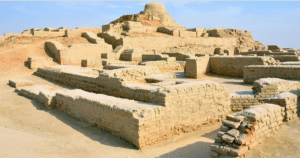
Long before Pakistan even came into existence, a great civilization lived on this soil. To begin with, the Indus Valley Civilization started around 3000 BC. It was, in fact, one of the first urban cultures in the world. Today, the remains of Mohenjodaro and Harappa are located in Pakistan.
These cities had a developed drainage system. They designed their streets and great public structures. This civilization was skilled in the trade in goods & crafts. The ancient city of Mohenjo-Daro is a UNESCO world heritage site located in the Province of Sindh. It gives a “taste” of an old world that flourished here.This early history has established the fact that Pakistan has been the birthplace of great civilizations ever since.
The Arrival of Islam: A Turning Point in the Region
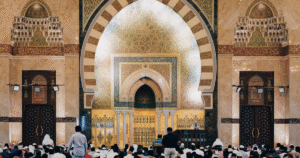
The introduction of Islam in Pakistan is one of the most pivotal historical events of Pakistan. In 711 CE, Muhammad bin Qasim invaded Sindh with an Arab army. The conquest was the introduction of Islam in the subcontinent. It had a lasting impact on the culture, religion and social organization of the area.
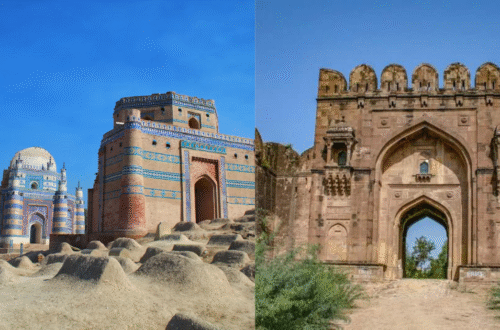
In the centuries that have passed, Islam has spread throughout the land. This area was once under the control of the Great Muslim Empires, such as the Mughal Empire. The Mughals constructed splendid monuments. They encouraged art, literature and architecture. They ruled for almost 300 years. This Islamic legacy is very much reflected in the culture in Pakistan today.
The War of Independence 1857: A Fight Against Colonial Rule
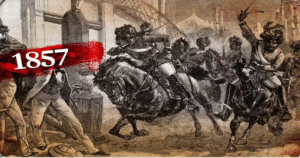
In 1857, soldiers and civilians rose against the British East India Company. This major revolt spread widely across the subcontinent, including today’s Pakistan. History knows it as the War of Independence.
This rebellion was quelled by the British. From 1857, the British Crown directly controlled the sub-continent. This was an event that forever altered things. The war caused a lot of destruction to the Muslims. They were of little political and economic significance.This fight sprouted a new political movement. Muslims started to see the need for a separate identity and voice.
The introduction of Pakistan in 1947: The most important of All ancient events of Pakistan
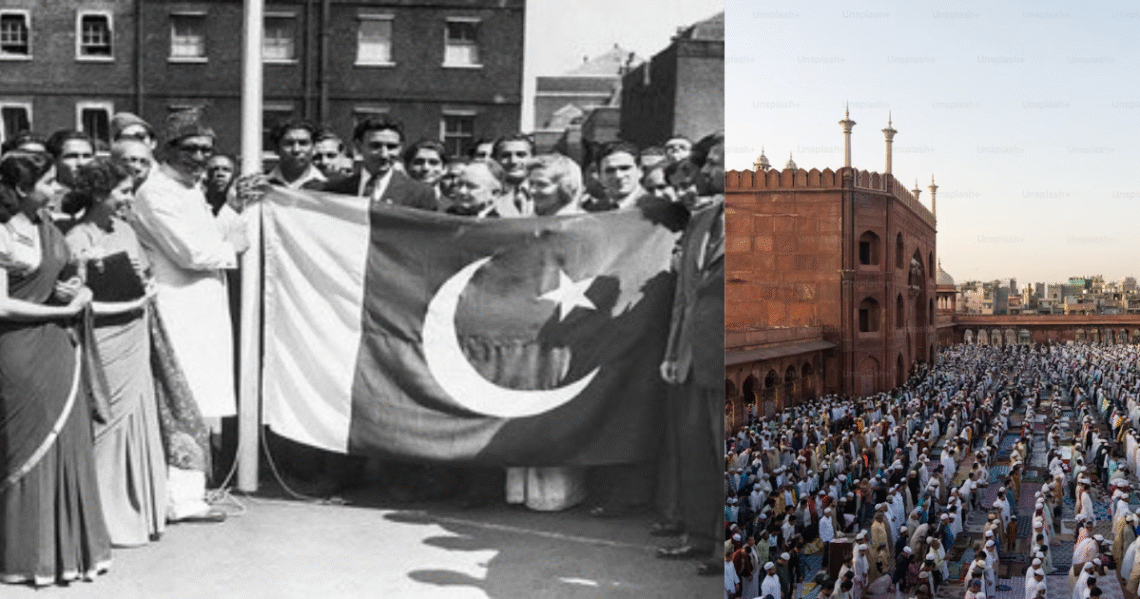
The maximum celebrated date within the records of Pakistan is 14th August, 1947. This is the day of Pakistan’s Independence.It became founded within British India through isolating it from the Indian nation as a house for Muslims of the subcontinent.
The chief of the Pakistan movement was Muhammad Ali Jinnah. He fought for Muslim rights via political approach. The All India Muslim League, below his management, demanded a separate country. Years of struggle and Pakistan was born.
The division of India was agonising. Millions of people crossed borders. Many lives were lost in communal violence. This tragedy was unfortunate but the establishment of Pakistan was a historical feat. It provided the Muslims with a space where they could make their home.
The 1965 and 1971 Wars: Defining Historical Events of Pakistan
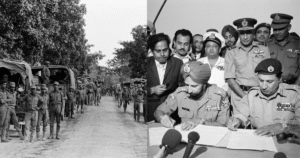
Pakistan has had two big wars against India. The disputed land of Kashmir was the subject of the war of 1965. Heroism was shown on the battlefield by Pakistan soldiers. The war ended in a ceasefire agreement that was a stalemate. It brought the Pakistani nation together in a mighty way, however.
There was much greater devastation in the 1971 war. The West Pakistan government had, for long, been neglecting East Pakistan. A civil war erupted due to political tensions and a harsh military repression. India fought on the side of East Pakistan. In December 1971, the former East Pakistan gained independence as the new nation of Bangladesh.
The severance of East Pakistan was a wound for Pakistan. It prompted leaders to review the political structure of the country. Soon after the Constitution of 1973 was introduced. It paved the way for the institution of parliamentary democracy in Pakistan.
Which was the first leadership of Pakistan?
To begin with, one of the earliest events in history that are associated with Pakistan is the events of the Indus Valley Civilization. Specifically, it began some three thousand years B.C.E. when there were only two of its great cities, Mohenjo-Daro and Harappa.
In which year Pakistan became Independent?
Pakistan gained independence on 14th August, 1947. Britain partitioned the Indian subcontinent and created Pakistan as a Muslim state. The visionary leader of Muslim country, Muhammad Ali Jinnah, established it.
How did the Indian independence movement of 1857 contribute to the history of Pakistan?
In 1857 a war erupted against British rule and was a great uprising. Although it was unsuccessful, it did arouse political awareness among the Muslims. Consequently, it finally reached a stage that produced the Pakistan Movement, which ultimately resulted in the birth of Pakistan.
How the war of 1971 affected Pakistan?
Separation of East Pakistan because of the war of 1971. Bangladesh has become an independent nation. One of the most devastating happenings of Pakistan’s history.
Why the Indus Valley Civilization is important in Pakistan’s history?
Undoubtedly, the Indus Valley Civilization takes Pakistan’s history back more than 5,000 years. It stands as one of the most advanced ancient civilizations in the world. Even today, Pakistanis regard it as a proud part of their rich cultural heritage.
Conclusion
Historical events of Pakistan are a great reminder of the journey of Pakistan. “In fact, each event has left its imprint on it, ranging from the ancient Indus Valley Civilization all the way till the birth of a new country in 1947. Consequently, this has shaped the rich heritage we see today.” Pakistan has experienced wars, partition and political turnarounds. But it moved forward all along. These historical events in Pakistan have influenced the values, identity and spirit of the Pakistani people. This history will make every Pakistani feel attached to his/her roots. It also to a certain extent educates the world about a nation that is still a strong and proud one.