The world history overview takes us on a journey through thousands of years of human civilization. From ancient empires to modern countries, history tells the tale of who we’re. It suggests how people lived, fought, built, and changed the sector around them. Knowledge of global records helps us make experience of ultra-modern occasions. It connects the beyond to the prevailing in meaningful methods. Many top notch civilizations rose and fell over centuries. Each one left at the back of instructions, cultures, and thoughts.
These ideas nonetheless influence our lives these days. A global records review is not just about dates and names. It is about information about human progress, warfare, and fulfillment. Wars have been fought, discoveries have been made, and revolutions modified whole societies. Every era added new demanding situations and new solutions. via analyzing records, we learn the way humans adapted and survived. We also study from beyond errors. This expertise allows us to build a higher future. So let us explore the most essential chapters inside the story of humanity.
Ancient Civilizations: Where World History Begins
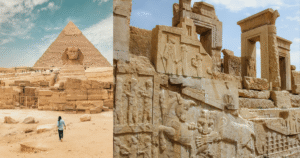
The earliest human civilizations appeared round 3500 BCE. Mesopotamia, Egypt, the Indus Valley, and China had been the primary wonderful societies. The ones civilizations constructed towns, created writing structures, and advanced felony pointers. The Egyptians built the pyramids, which although stand these days. The Mesopotamians wrote a number of the primary prison codes. These early societies set the inspiration for all destiny in human development. They traded with each other and shared information. Agriculture became the spine of their economies. As a result, populations grew unexpectedly. Those ancient civilizations formed language, faith, and governance for centuries to come.
The Rise and Fall of Great Empires

Empires dominated the ancient and medieval world. First of all, the Roman Empire controlled much of Europe, North Africa, and the Middle East. At its peak, Rome was a center of art, law, and architecture. However, internal conflicts and invasions caused its fall in 476 CE. In addition, the Mongol Empire became the largest land empire in history. It stretched from Asia to Eastern Europe in the 13th century. Similarly, the Ottoman Empire ruled for over 600 years across three continents. These empires connected trade routes and spread cultures. Nevertheless, power struggles eventually brought them all down. As a result, their legacies continue to shape modern borders and cultures.
The Age of Exploration and Its Global Impact
The Age of Exploration began in the 15th century. First, European nations like Spain, Portugal, and England sent ships across unknown oceans. Christopher Columbus reached the Americas in 1492. Similarly, Vasco da Gama found a sea route to India in 1498. As a result, these voyages opened new trade routes and connected continents. Furthermore, they introduced new crops, animals, and diseases to different parts of the world. Unfortunately, exploration also led to colonization and the suffering of indigenous peoples. In addition, the slave trade caused immense human tragedy during this period. Despite this, the Age of Exploration permanently changed the global map. Finally, it laid the groundwork for the modern interconnected world.
Revolutions That Changed the Course of Histor
Revolutions reshaped political and social systems throughout the globe. The yank Revolution in 1776 created the primary current democratic republic. Rapidly after, the French Revolution in 1789 overthrew monarchy and delivered thoughts of liberty and equality. These thoughts spread throughout Europe and stimulated destiny actions. The commercial Revolution within the 18th and nineteenth centuries converted economies worldwide. Machines replaced guide hard work in factories. Towns grew unexpectedly as human beings moved from rural regions. Moreover, the Russian Revolution of 1917 ended centuries of Tsarist rule. It introduced communism as a main political ideology. Every revolution added dramatic change to hundreds of thousands of humans and redefined the which means of electricity.
The 20th Century: The Most Turbulent Era in World History Overview
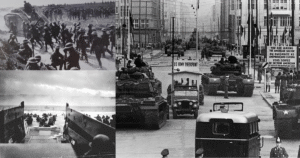
The 20th century was the most violent and transformative period in modern history. First, World War I began in 1914 and killed over 17 million people. Just two decades later, World War II caused even greater destruction. Over 70 million people died between 1939 and 1945. In fact, the Holocaust was one of the darkest chapters in human history. After the wars, the Cold War divided the world into two rival camps. As a result, the United States and the Soviet Union competed for global influence. Meanwhile, independence movements freed many Asian and African nations from colonial rule. Furthermore, the invention of nuclear weapons created a new global threat. However, international organizations like the United Nations worked to promote peace. Finally, by the end of the century, globalization connected the world more than ever before.
what is a global history review?
An international records evaluation is a large observation of foremost events, civilizations, and changes throughout human records. It covers ancient instances to the present day generation. It enables people to understand how the arena evolved over hundreds of years.
What is the oldest civilisation within the history of worldwide family members?
Mesopotamia, that’s modern-day Iraq, is frequently known as the place’s oldest civilisation. It dates back to spherical 3500 BCE. It gave us the primary writing machine and prison codes.
What caused the fall of the Roman Empire?
There are various things that led to the autumn of the Roman Empire. Those include corruption inside the empire, financial troubles, and invasions through barbarians.Political instability eroded its management.The western half formally collapsed in 476 CE.
How did the economic Revolution alternate the world?
The Industrial Revolution shifted economies from farming to manufacturing facility-based manufacturing. It created new jobs, towns, and technology. It additionally induced social changes similar to the rise of running elegance.
Why is the twentieth century vital in international history?
The twentieth century observed two international wars, the upward push and fall of communism, and fast technological improvement. It reshaped political borders and global strength. It additionally delivered principal human rights actions and the digital age.
Conclusion
A world history overview reminds us that human progress has by no means been easy or smooth. Great civilizations rose and fell. Revolutions modified the which means of freedom. Wars brought about suffering but additionally stimulated harmony. Each era in global history has something important to educate us. We should examine the past carefully to keep away from repeating its worst errors. History additionally indicates the excellent energy and creativity of humans. From ancient farmers to trendy leaders, people have continually found methods to move ahead. This world history overview shows that via understanding our shared beyond, we construct a more potent and more informed future. The tale of world history is, in truth, the tale of everyone.